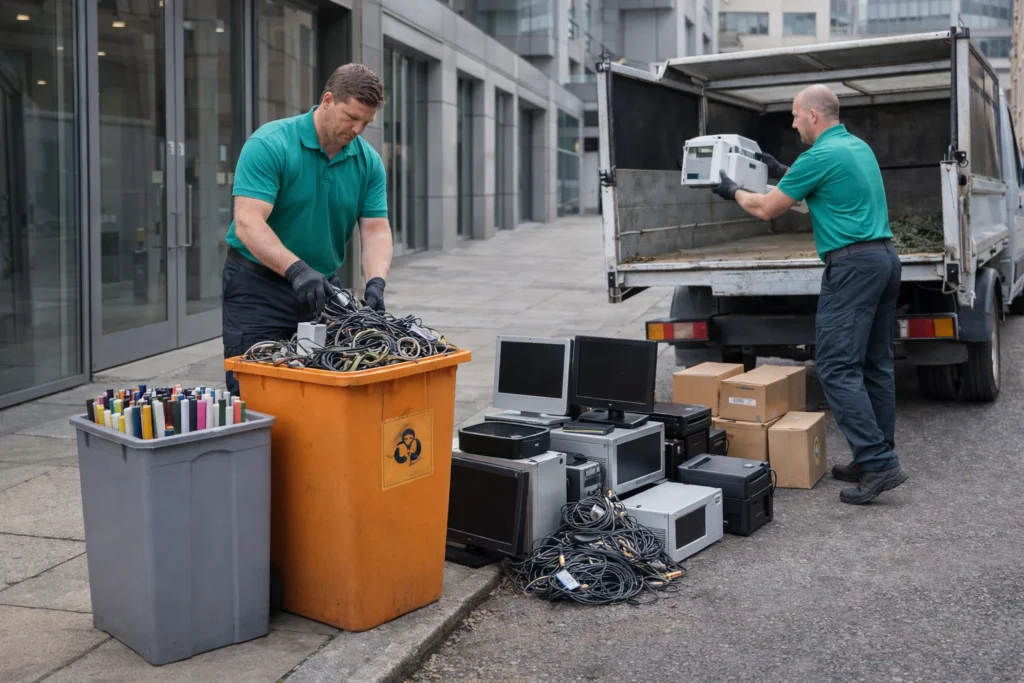
Managing waste in Westminster has become more complex in recent years, particularly for businesses and residents handling electrical equipment and disposable vaping products. Offices in Victoria, retail stores in Soho, and residential properties across SW1 often generate electronic waste that must now be handled carefully due to updated environmental regulations.
As of 2026, the United Kingdom has strengthened rules surrounding Waste Electrical and Electronic Equipment (WEEE) as well as the disposal of disposable vapes following their national ban. These regulations aim to reduce environmental harm, prevent fire risks, and ensure hazardous materials are handled safely.
For businesses and property managers in Westminster, incorrectly disposing of items such as laptops, batteries, monitors, or vaping devices can lead to serious consequences. Throwing electrical equipment into general waste bins is no longer acceptable and may result in financial penalties under the legal “Duty of Care” waste regulations.
Understanding how these rules work and how to dispose of electronic waste responsibly is essential for maintaining compliance and protecting the environment.
Why Has Vape Disposal Become a Major Waste Issue in 2026?
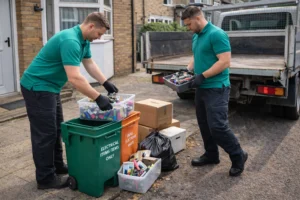
The UK government banned single-use disposable vapes in 2025 due to growing environmental concerns and fire hazards associated with lithium batteries. Despite the ban, many businesses and households still encounter leftover devices during office clearances, stockroom cleanouts, or residential decluttering.
Disposable vapes contain several hazardous components.
- Lithium-ion batteries
- Plastic casings
- Nicotine residue
- Micro electronic circuits
Because of these components, vapes are now categorised as electrical waste and fall under WEEE Category 15.
Improper disposal can cause serious problems during waste processing. If lithium batteries are crushed or damaged in standard waste collection vehicles, they may ignite and start fires inside rubbish trucks or recycling facilities.
For this reason, Westminster waste guidelines prohibit the disposal of vapes in:
- Public street bins
- Commercial rubbish sacks
- General household waste collections
Instead, they must be transported by licensed waste carriers to facilities that can safely dismantle the battery components and recycle the materials.
How Should Westminster Businesses Dispose of Old Vapes?
Businesses operating in central London frequently discover unused or unsold vaping devices when clearing storage rooms or reorganising retail inventory. Proper disposal requires specialist handling to prevent environmental harm and ensure compliance with local waste regulations.
The safest method is to arrange a licensed collection service that transports the devices to approved WEEE recycling facilities.
Businesses that require reliable rubbish removal Westminster services can arrange specialist electronic waste collections where vape devices and other electronic products are safely separated and processed through regulated recycling channels.
Why Is IT Waste a Data Security Risk for Westminster Offices?
Electronic waste is not just an environmental issue. For many organisations operating in Westminster, IT disposal is also a major data security concern.
Offices near Whitehall, St James’s, or Victoria often manage sensitive data through computers, servers, and storage devices. Simply discarding these items without proper disposal could expose confidential information.
Old IT equipment may still contain:
- Client databases
- Financial records
- Internal company communications
- Login credentials or encrypted files
Proper WEEE recycling ensures that electronic devices are dismantled safely and processed through secure recycling systems. Components such as hard drives are either wiped, destroyed, or processed through certified recycling channels.
Additionally, the recycling process allows valuable materials to be recovered from devices. Metals such as copper, aluminium, lithium, and even small quantities of gold can be extracted and reused in new electronics manufacturing.
What Types of Items Are Classified as WEEE?
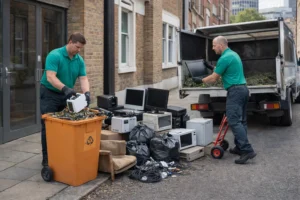
Many people assume that WEEE only refers to computers or televisions. In reality, the category includes almost any product that contains electrical components, batteries, or electronic circuitry.
In Westminster property clearances, common WEEE items include the following.
| WEEE Category | Typical Items |
| IT Equipment | Laptops, desktop computers, printers, keyboards |
| Communication Devices | Mobile phones, desk phones, routers |
| Screens and Displays | LCD monitors, LED displays, televisions |
| Office Appliances | Coffee machines, kettles, microwaves |
| Electrical Accessories | Chargers, cables, extension leads |
If an item requires electricity, batteries, or charging to operate, it will typically fall under WEEE regulations.
Because these devices often contain hazardous materials such as lead, mercury, or lithium, they must be processed through specialist recycling systems rather than standard landfill waste streams.
What Is Your Legal Duty of Care When Disposing of Electronic Waste?
Under UK waste management law, any person or organisation producing waste has a legal responsibility to ensure it is handled properly. This responsibility is known as the Duty of Care.
For Westminster businesses and residents, this means the waste producer remains legally responsible for the material until it reaches a licensed disposal facility.
If electronic waste is given to an unlicensed carrier and later discovered illegally dumped, the original owner of the waste may still be held accountable.
Potential consequences include:
- Fines for improper waste disposal
- Investigation by environmental authorities
- Liability for cleanup costs
- Reputational damage for businesses
This is why it is essential to work with licensed waste carriers who provide proper documentation and proof of disposal.
How Do Licensed Waste Removal Services Ensure Compliance?
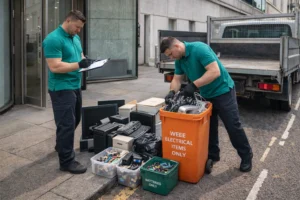
Professional rubbish removal companies play an important role in helping Westminster businesses and residents comply with WEEE regulations. By arranging collections through licensed carriers, property owners can ensure their electronic waste is handled responsibly.
Licensed services typically follow several key procedures.
- Waste is sorted according to WEEE categories
- Hazardous components such as batteries are separated
- Items are transported to authorised recycling facilities
- Disposal records are documented for legal compliance
One of the most important documents provided is the Waste Transfer Note.
| Document | Purpose |
| Waste Transfer Note (WTN) | Confirms legal transfer of waste to a licensed carrier |
| Waste Carrier Licence | Verifies the company is authorised to transport waste |
| Recycling Confirmation | Shows the waste was processed at approved facilities |
These records provide proof that waste was handled responsibly and help protect businesses from liability.
Why Is Wait and Load Collection Useful for Westminster Offices?
Parking restrictions in Westminster can make traditional waste collection difficult, particularly in busy commercial areas such as Soho, Victoria, and Westminster City.
Many streets have controlled parking zones or red routes where leaving waste containers or skips is not allowed.
To solve this problem, professional teams often use a wait-and-see approach.
This method works as follows:
- A collection vehicle arrives at an agreed time
- Waste is loaded immediately by trained staff
- The vehicle leaves once the collection is complete
Benefits of this system include:
- No need for council skip permits
- Reduced disruption to traffic
- Faster removal of sensitive equipment
- Safer handling of IT equipment and electronic waste
For offices disposing of servers, computers, or monitors, this method ensures the equipment is collected directly from the building without being left unattended outside.
How Can Westminster Businesses Stay Compliant with WEEE Rules?
With stricter environmental rules now in place, businesses must take electronic waste management seriously. Planning regular collections and working with licensed waste carriers ensures that outdated equipment and banned products, such as disposable vapes, are removed safely.
Responsible waste disposal protects the environment, reduces fire risks, and helps organisations meet their legal obligations.
Whether clearing out a storage room, upgrading office equipment, or disposing of leftover vaping stock, proper waste handling ensures that electronic items are recycled responsibly and processed according to the latest 2026 WEEE regulations.