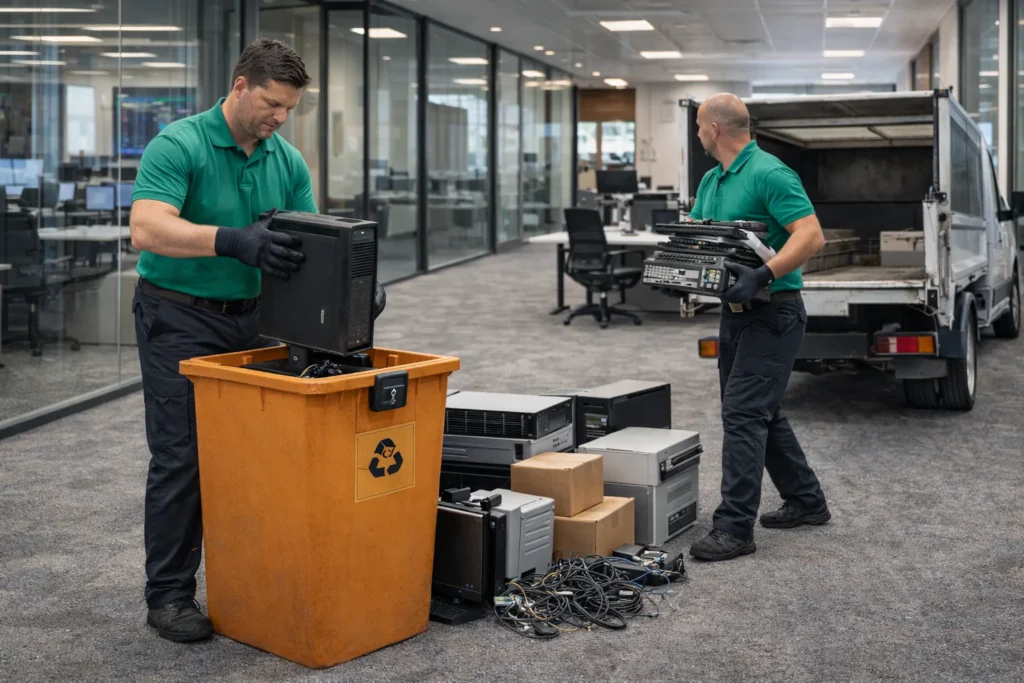
Why Is Office De-cluttering Becoming Essential for Westminster Businesses in 2026?
Across Westminster’s commercial districts such as Victoria, St James’s, Mayfair, and Soho, businesses are modernising their workspaces at an unprecedented pace.
Hybrid working models, digital collaboration tools, and upgraded office infrastructure have dramatically changed the way companies operate. As a result, many organisations are now replacing outdated computers, monitors, printers, and servers more frequently than ever before.
When businesses move to new systems or cloud platforms, old hardware quickly becomes redundant. Storage rooms and server cupboards that once held essential IT infrastructure are now filled with unused devices.
Office de-cluttering is therefore no longer just about creating physical space. It is about managing electronic waste responsibly, protecting sensitive data, and ensuring compliance with environmental regulations.
Companies in SW1 must now consider how to dispose of IT equipment in a way that is secure, traceable, and environmentally responsible.
What Is WEEE and Why Does It Matter for Office Equipment Disposal?
WEEE stands for Waste Electrical and Electronic Equipment. This category includes any device that relies on electricity or batteries to function.
In modern offices, WEEE includes a wide variety of items ranging from laptops and monitors to complex server infrastructure.
Examples of WEEE Commonly Found in Offices
| Equipment Type | Examples |
| Computer Hardware | Desktop PCs, laptops, servers |
| Office Technology | Printers, scanners, photocopiers |
| Display Equipment | Monitors, televisions, presentation screens |
| Networking Devices | Routers, switches, data storage units |
These devices contain valuable materials such as copper, aluminium, and rare metals. However, they also contain hazardous components, including batteries and electronic circuits that require specialised recycling.
Because of this, WEEE cannot simply be placed in general waste bins or taken to standard landfill sites.
Why Is Data Security a Major Concern When Disposing of IT Equipment?
For many companies in Westminster, the most valuable asset stored within office hardware is not the physical device itself but the data contained inside it.
A discarded laptop or server may still hold sensitive information even after files have been deleted. Modern data recovery tools can restore files that appear to be erased.
This creates a serious cybersecurity risk if devices are disposed of improperly.
Businesses operating in financial services, law, marketing, and consulting sectors must treat hardware disposal as part of their data protection strategy.
Data Security Risks From Improper Disposal
| Risk | Potential Consequence |
| Data recovery from discarded drives | Exposure of confidential client information |
| Lost storage devices | Breach of company intellectual property |
| Improper destruction | Violation of data protection regulations |
Secure disposal ensures that storage devices are processed through authorised recycling facilities where data-bearing components are destroyed or securely wiped.
This process protects both companies and their clients from potential data breaches.
How Does the 2026 Digital Waste Tracking System Affect Businesses?
One of the most significant regulatory changes in 2026 is the introduction of the UK’s Digital Waste Tracking system. This national platform records the movement of waste from its source to its final processing facility.
For businesses in Westminster, this means every collection of commercial waste must now be documented digitally.
This system replaces many of the old paper-based records that previously made waste monitoring difficult.
Key Elements of Digital Waste Tracking
| Process Stage | Description |
| Waste Collection | Licensed carrier records the collection |
| Transport | Waste movement logged in national system |
| Processing | Recycling facility confirms receipt |
| Compliance | Businesses retain digital records |
These records are particularly important if a business is audited by the Environment Agency or Westminster Council.
Without proper documentation, a company could be held responsible for illegal dumping even if the waste was collected by a third party.
What Are Waste Transfer Notes and Why Are They Important?
Waste Transfer Notes are the official documents that prove commercial waste has been handled legally.
Under UK environmental law, businesses must retain these records as evidence that their waste has been transferred to a licensed waste carrier.
Digital Waste Transfer Notes now form part of the new tracking system.
Information Included in a Waste Transfer Note
| Required Information | Purpose |
| Type of waste | Identifies materials being disposed |
| Quantity | Records volume of equipment |
| Carrier licence details | Confirms authorised transporter |
| Collection date | Documents the transfer event |
These records protect businesses from liability and demonstrate compliance with environmental regulations.
Companies that fail to keep proper documentation may face financial penalties.
How Can Businesses Dispose of IT Equipment Without Disrupting Office Operations?
One of the biggest challenges for companies located in Westminster is arranging equipment removal without interrupting daily business activities.
Commercial areas such as Soho, Victoria, and Pimlico experience heavy traffic and strict parking restrictions during working hours.
Large removal vehicles or waste collections during peak hours can create logistical complications.
Professional removal services address this problem by offering flexible collection schedules.
Common Scheduling Options for Office Clearance
| Collection Time | Benefits |
| Early morning | Completed before staff arrive |
| Evening collections | No disruption to office activity |
| Weekend clearances | Ideal for large equipment removals |
This approach allows businesses to complete office upgrades, IT replacements, or workspace renovations without affecting employees or client meetings.
Why Do Central London Offices Face Unique Equipment Removal Challenges?
Westminster’s architecture presents practical challenges that are rarely found in modern office parks.
Many buildings in areas such as Mayfair and St James’s are historic properties converted into offices. These buildings often include narrow corridors, compact lifts, and strict building management rules.
Structural Challenges in Westminster Offices
| Building Feature | Removal Difficulty |
| Historic staircases | Difficult to move large servers |
| Small lifts | Large photocopiers may not fit |
| Shared office buildings | Limited access hours |
| Concierge restrictions | Strict moving procedures |
Removing large office equipment from these environments requires experienced teams who understand how to handle heavy technology safely.
Specialised lifting techniques and protective materials help prevent damage to floors, walls, and communal spaces.
How Can Office De-cluttering Support Corporate Sustainability Goals?
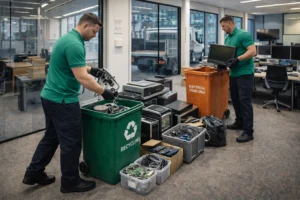
Sustainability has become a major priority for organisations across the UK. Environmental, Social, and Governance reporting is now an important part of corporate accountability.
Proper disposal of electronic equipment contributes to these sustainability targets by reducing landfill waste and encouraging recycling.
Electronic recycling allows valuable materials to be recovered and reused in manufacturing.
Environmental Benefits of Responsible WEEE Recycling
| Benefit | Impact |
| Reduced landfill waste | Protects natural ecosystems |
| Resource recovery | Metals reused in manufacturing |
| Lower carbon emissions | Reduces need for new mining |
| Circular economy support | Encourages sustainable production |
Businesses that recycle IT equipment responsibly can include these efforts in their sustainability reports and ESG commitments.
Why Do Many Westminster Businesses Use Professional Clearance Services?
Transporting IT equipment for recycling can be difficult for companies without the right vehicles or manpower.
Servers, photocopiers, and large office printers are extremely heavy and often located in restricted access areas.
Professional clearance teams specialise in safely removing these items while ensuring they are processed through authorised recycling facilities.
Many companies searching for rubbish clearance westminster services choose experienced providers because they combine secure handling with environmental compliance.
This ensures that equipment is removed efficiently while meeting legal responsibilities under UK waste regulations.
Conclusion: Need Help Clearing Old IT Equipment From Your Office?
Office technology evolves rapidly, and businesses across Westminster are constantly upgrading their equipment to stay competitive. However, disposing of outdated devices requires careful planning to ensure compliance with environmental regulations and data protection standards.
Improper disposal of IT equipment can create security risks, legal liabilities, and environmental harm. By working with licensed waste removal professionals, businesses can ensure that their electronic equipment is handled safely, documented properly, and recycled responsibly.
If your office in Westminster is planning an IT upgrade, relocation, or workspace decluttering project, our experienced team can help manage the entire process.
Contact our team today to arrange secure and compliant office equipment clearance. We handle everything from lifting heavy hardware to ensuring responsible recycling, allowing your business to focus on its next stage of growth.